

Most parents we meet expected the first dental visit to happen around age three, or when something starts to hurt. By then, decay may already have had two years to start. Baby teeth have thin enamel, and a cavity can spread through it quickly.
Why so early?
Tooth decay is one of the most common long-term conditions in children, and it often starts quietly. Early decay looks like a chalky white line near the gums, which is easy to miss at home. A dentist can spot it while it can still be reversed with fluoride and better habits.
The first visit also gives you a plan. We talk about feeding, teething, thumb-sucking and what to expect as more teeth come in. And your child learns that the dental chair is a calm place, long before they ever need a filling.
What happens at the first visit?
For babies and toddlers, the visit usually takes 20 to 30 minutes and involves no drilling. A typical visit looks like this:
- A short chat. We ask about feeding, bottles at night, medicines and any family history of decay.
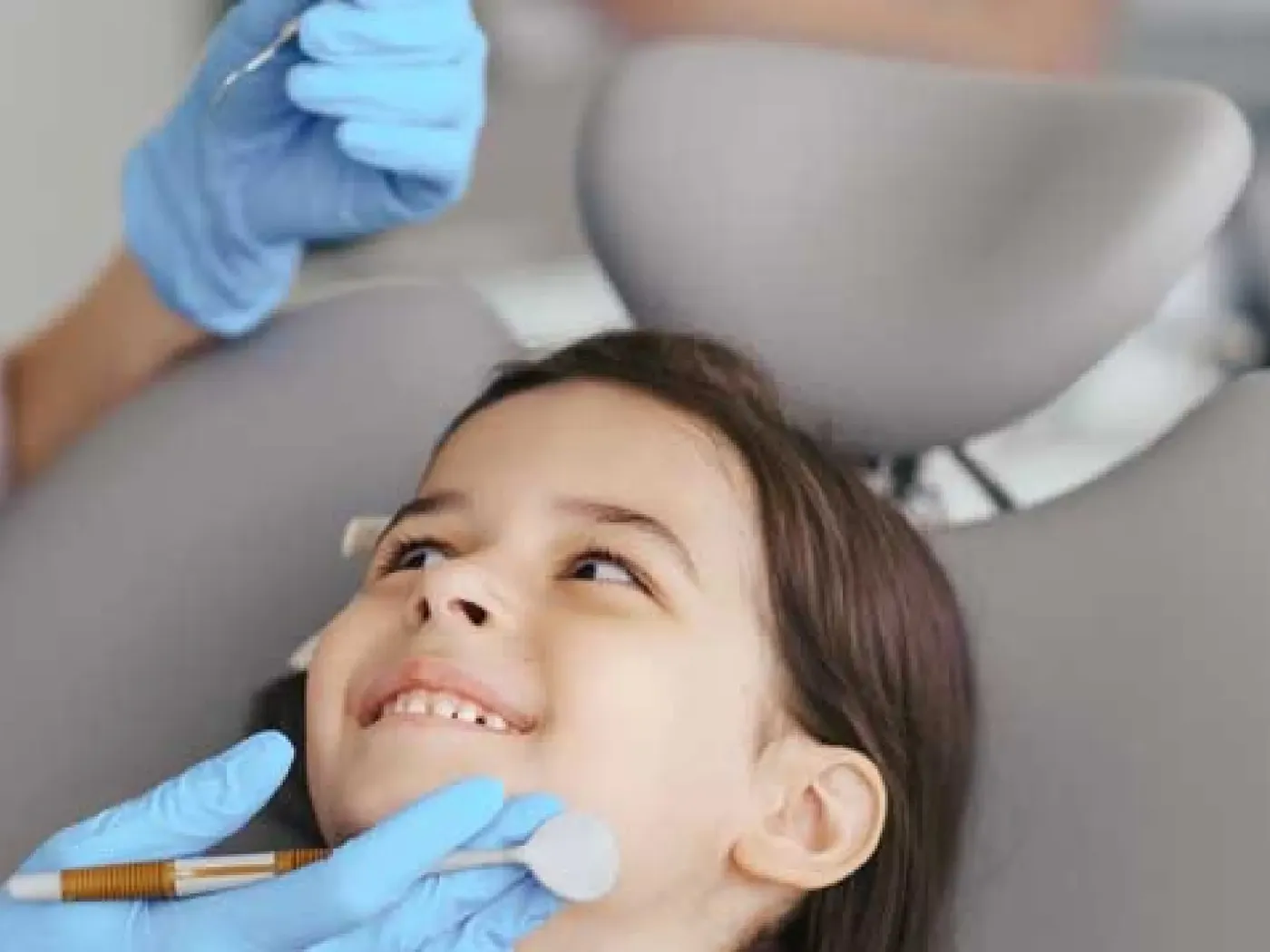
- A knee-to-knee check. Your child lies back on your lap facing the dentist, so they can see you the whole time.
- A look at teeth, gums and bite. We check for white spots, early cavities, and how the teeth and jaws are developing.
- Cleaning and fluoride if needed. A gentle wipe or brush, and a fluoride varnish if the teeth would benefit from it.
- A home plan. We show you how to brush your child's teeth and how much toothpaste to use, and agree when to come back.
What we check, by age
| Age | What we check | What you can do at home |
|---|---|---|
| 6 to 12 months | First teeth, gums, teething, feeding habits | Wipe gums and new teeth twice a day; a rice-grain smear of fluoride toothpaste once teeth appear |
| 1 to 3 years | Early white spots, bottle and night-feeding effects, bite | Brush twice a day; avoid sending your child to bed with milk or juice in a bottle |
| 3 to 6 years | Cavities between teeth, habits such as thumb-sucking, spacing for adult teeth | Use a pea-sized amount of fluoride toothpaste; help with brushing until about age seven |
- 6 to 12 months
- What we check
- First teeth, gums, teething, feeding habits
- What you can do at home
- Wipe gums and new teeth twice a day; a rice-grain smear of fluoride toothpaste once teeth appear
- 1 to 3 years
- What we check
- Early white spots, bottle and night-feeding effects, bite
- What you can do at home
- Brush twice a day; avoid sending your child to bed with milk or juice in a bottle
- 3 to 6 years
- What we check
- Cavities between teeth, habits such as thumb-sucking, spacing for adult teeth
- What you can do at home
- Use a pea-sized amount of fluoride toothpaste; help with brushing until about age seven
How to prepare your child
- Book a morning slot, when young children are usually rested and calmer.
- Keep the words simple and positive: "The dentist is going to count your teeth." Avoid words like "hurt" or "injection".
- Read a picture book about visiting the dentist, or play a counting-teeth game at home.
- Bring a favourite toy, and stay close. Your calm is the most reassuring thing in the room.
Signs to book sooner
Don't wait for the routine visit if you notice any of these:
- White, brown or black spots on the teeth, especially near the gums
- Swelling of the gums or face, or a small pimple-like bump on the gum
- Pain, crying while eating, or refusing food on one side
- A fall or knock that chips, loosens or darkens a tooth
Caring for baby teeth at home
Baby teeth hold space for the adult teeth and help your child chew and speak clearly, so they are worth protecting. Brush twice a day, last thing at night and one other time. Under three, use a smear of fluoride toothpaste the size of a grain of rice; from three to six, a pea-sized amount. Keep sugary drinks and snacks to mealtimes, and give only water between meals and at night.
What this means for you
If your child has a tooth, or is close to their first birthday, it is a good time to book. Our kids' dentistry page explains what we offer. Dr Parmod Gulia sees children at both clinics, Sector 53 and Sector 57.
Read next
Common questions
Are baby teeth important if they fall out anyway?
Yes. Baby teeth hold the space for adult teeth, help with chewing and speech, and some stay until around age twelve. Decay in baby teeth can cause pain and infection, and it can affect the adult teeth developing underneath.
Should I use fluoride toothpaste for my baby?
Most dental guidance, including the NHS and the American Academy of Pediatric Dentistry, recommends fluoride toothpaste from the first tooth. Use a smear the size of a grain of rice under age three and a pea-sized amount from three to six.
My child is scared of the dentist. What can I do?
Keep the visit short and positive, use simple words, and stay close. A pediatric dentist is trained to work at a child's pace. If your child is anxious, tell us when you book and we will plan the visit around them.
How often should my child see a dentist after the first visit?
Many children are seen about every six months. The dentist may suggest more frequent visits if your child is at higher risk of decay, or fewer if their teeth are very healthy.
What if my child already has a cavity?
Small cavities in baby teeth can often be treated simply, sometimes without drilling. The sooner a cavity is seen, the more options there are, so book a check-up rather than waiting for pain.
Sources
This guide is general information and does not replace an examination by a dentist. If you are in pain or have swelling, call either clinic.