

When a tooth is lost, the two options most people hear about are an implant and a bridge. Both are fixed, so you don't take them out at night, and both can look natural. They work in very different ways, though, and that difference matters more than which one sounds more modern.
What is a dental implant?
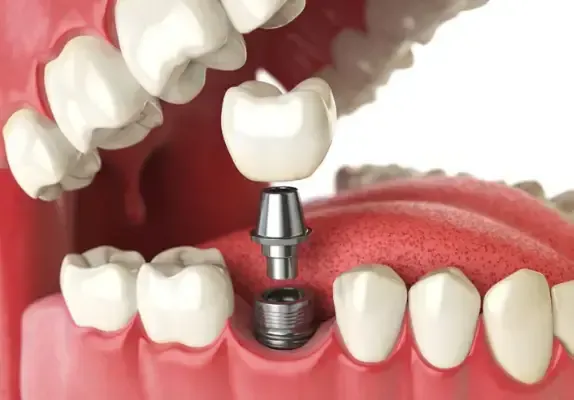
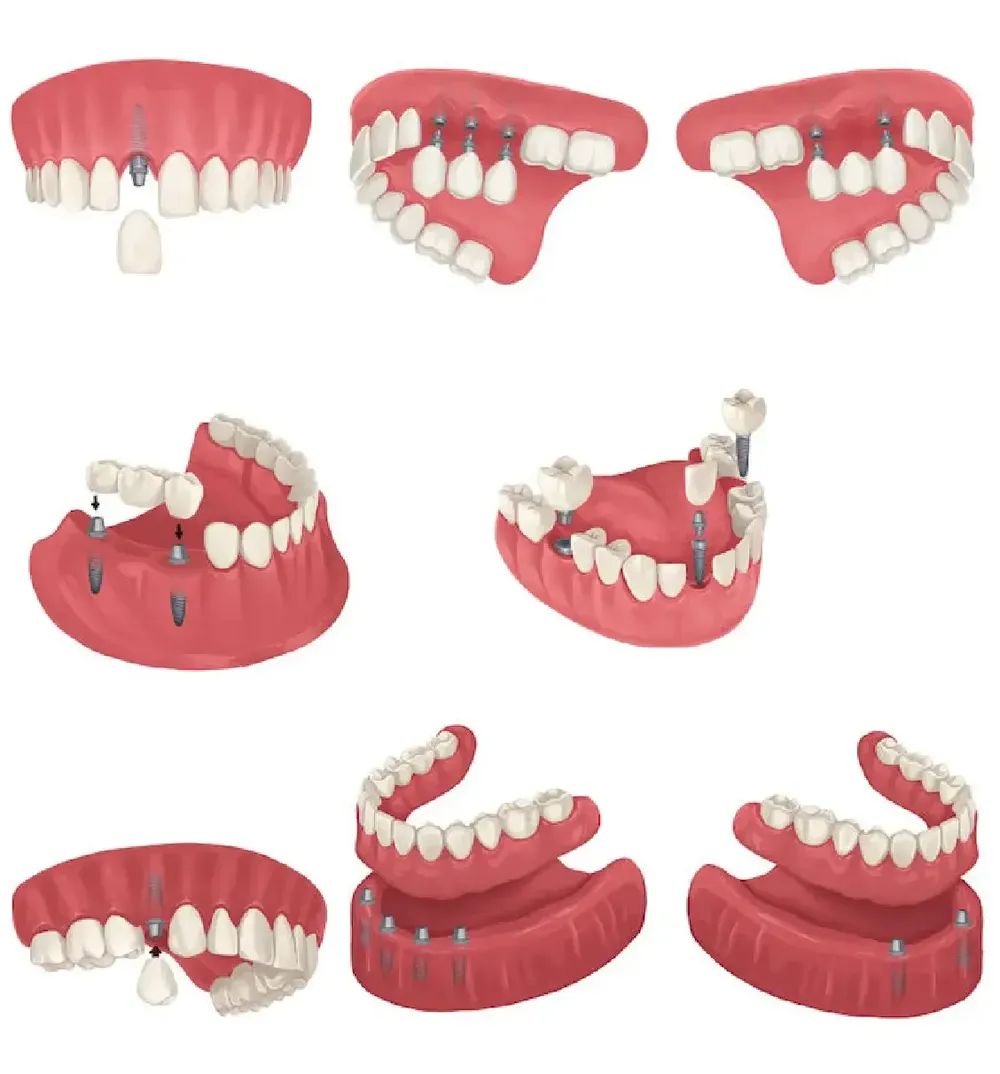
An implant replaces the root of the tooth. A small titanium screw is placed into the jawbone under local anaesthesia. Over the next few months the bone grows tightly around it, a process called osseointegration. A crown is then fixed on top, made to match your other teeth.
Because it is anchored in bone, an implant does not rely on any other tooth. It also puts chewing forces back into the jaw, which helps the bone in that area stay in shape.
What is a dental bridge?
A bridge spans the gap. The teeth on either side are shaped and fitted with crowns, and a false tooth is joined between them as one piece. It is cemented in place and usually takes two or three visits.
A bridge is a well-proven treatment and a good fit in the right mouth. The trade-off is that healthy enamel is removed from the supporting teeth, and those teeth now carry the load of three.
Implant vs bridge at a glance
| Dental implant | Dental bridge | |
|---|---|---|
| Replaces the root? | Yes, a titanium post in the bone | No, the false tooth sits on the gum |
| Neighbouring teeth | Left untouched | Trimmed and crowned to hold the bridge |
| Treatment time | Usually 3 to 6 months, including healing | Usually 2 to 3 visits over a few weeks |
| Surgery | A minor procedure under local anaesthesia | No surgery |
| Cleaning | Brush and floss like a natural tooth | Needs a floss threader or interdental brush under the false tooth |
| Bone in the gap | Helps keep it | Can slowly shrink over time |
- Replaces the root?
- Dental implant
- Yes, a titanium post in the bone
- Dental bridge
- No, the false tooth sits on the gum
- Neighbouring teeth
- Dental implant
- Left untouched
- Dental bridge
- Trimmed and crowned to hold the bridge
- Treatment time
- Dental implant
- Usually 3 to 6 months, including healing
- Dental bridge
- Usually 2 to 3 visits over a few weeks
- Surgery
- Dental implant
- A minor procedure under local anaesthesia
- Dental bridge
- No surgery
- Cleaning
- Dental implant
- Brush and floss like a natural tooth
- Dental bridge
- Needs a floss threader or interdental brush under the false tooth
- Bone in the gap
- Dental implant
- Helps keep it
- Dental bridge
- Can slowly shrink over time
When an implant usually makes more sense
- The teeth next to the gap are healthy and have no large fillings or crowns.
- You have enough bone, or can have a small graft to build it up.
- Your gums are healthy and you don't smoke, or are willing to stop around treatment.
- You want the longest-term option and can allow a few months for healing.
When a bridge can be the better choice
- The neighbouring teeth already need crowns, so shaping them is not a loss.
- There is not enough bone, and you would prefer to avoid grafting.
- A medical condition or medicine makes minor surgery unsuitable for now.
- You need the gap filled quickly, for example before an event.
What if you leave the gap?
A gap is more than a cosmetic problem. Over months and years, the teeth beside it can tip into the space, and the opposite tooth can drift out of its socket. That changes your bite and makes food trap more easily. The bone where the root used to be also slowly shrinks, which can make an implant harder to place later.
How we decide at Dental Krafts
We start with an examination and X-rays, and a 3D scan where bone needs to be measured precisely. We check the health of your gums and the neighbouring teeth, and talk through your medical history. Then we lay out each option, how long it takes and how to care for it, so you can decide with the full picture.
What this means for you
If the teeth around your gap are healthy, an implant is often the better long-term choice. If they already need crowns, a bridge can do two jobs at once. Our dental implants and crowns and bridges pages explain each treatment. Dr Ruchi Goel plans implant and bridge work at both clinics, Sector 53 and Sector 57.
Read next
Common questions
Is a dental implant better than a bridge?
Neither is better for everyone. An implant is often preferred when the neighbouring teeth are healthy and there is enough bone. A bridge can be the better choice when those teeth already need crowns or when surgery is not suitable.
Does getting a dental implant hurt?
The implant is placed under local anaesthesia, so you should feel pressure but not pain. Most people describe a few days of soreness afterwards, similar to having a tooth removed, which is usually managed with ordinary painkillers.
How long does a dental bridge last?
Many bridges last ten years or longer with good cleaning and regular check-ups. The supporting teeth can still get decay or gum disease, so cleaning under the bridge every day matters.
Can I get an implant if I have diabetes or smoke?
Often, yes. Well-controlled diabetes does not usually rule out implants. Smoking raises the risk of the implant not healing into the bone, so we usually advise stopping around treatment. Your dentist will assess your own situation.
What if I don't have enough bone for an implant?
A bone graft can often rebuild the area before or during implant placement. If grafting is not right for you, a bridge or another option may suit you better.
Sources
- American Dental Association, MouthHealthy. Dental implants. · mouthhealthy.org
- American Dental Association, MouthHealthy. Bridges. · mouthhealthy.org
- Cleveland Clinic. Dental implants. · clevelandclinic.org
- Cleveland Clinic. Dental bridges. · clevelandclinic.org
This guide is general information and does not replace an examination by a dentist. If you are in pain or have swelling, call either clinic.